Tulsa, Oklahoma · 2026 Guide

Hair restoration in Tulsa, Oklahoma

Looking into a hair transplant in Tulsa — or want to know whether medication can protect your hair before you consider surgery? This independent guide covers every option, the evidence behind each, and the Tulsa-area clinics that handle the procedure.

90–95%Transplant graft survival
$6.5k–$13kTypical Tulsa cost
10 optionsCompared below

Tulsa hair transplant options

Tulsa and Oklahoma providers offering FUE and FUT hair restoration. Visit each clinic's website to check credentials and reviews and to arrange a consult. We list them to point you in the right direction — always confirm a surgeon's qualifications yourself.

FUEsion Hair Clinics

Tulsa

Modern, AI-assisted FUE plus a full range of surgical & non-surgical options.

Visit site →

HairClub Tulsa

Tulsa

FUE transplants plus non-surgical regrowth, via Bosley-affiliated physicians.

Visit site →

Natural Transplants

Tulsa

Both FUT and FUE, customizable down to a single hair for natural density.

Visit site →

Great Hair Transplants

Dr. Brett Bolton · serves Tulsa

Hair-implant specialists for men and women, including robotic FUE.

Visit site →

RESTORE Hair

OK · serves Tulsa

FUE hair restoration with a physician-led team serving Oklahoma.

Visit site →

Is a hair transplant right for you?

In a transplant, a surgeon moves your own DHT-resistant follicles from the back of the scalp into the thinning areas up top. It's the only lasting fix — but for many people it isn't the first thing to reach for.

How it works

FUE & FUT

Surgeons harvest follicular units either one-by-one (FUE, no linear scar) or from a strip (FUT), then place them into thinning zones. Transplanted hair keeps growing for life because it's resistant to the hormone (DHT) that causes male-pattern loss.

90–95% graft survival (up to 97–98% with top surgeons)

Real-world yield ranges ~70–97% depending heavily on surgeon skill and technique.

Cost & candidacy

What to expect in Tulsa

A Tulsa hair transplant generally runs $6,500–$13,000, priced by the number of grafts — Oklahoma tends to run a bit cheaper than the coasts. Strong candidates have a solid donor area and realistic goals, and most surgeons pair surgery with ongoing medication (below) to protect the hair you keep.

Permanent results · one-time procedure

A consultation is the only way to get an accurate graft count and quote.

Before surgery: the best non-surgical options

Caught early, hair loss can frequently be slowed, halted, or partly reversed without an operation. The place to start, backed by the best evidence, is minoxidil paired with finasteride — two different mechanisms that work better together than apart. Every leading option below is spelled out with its honest evidence.
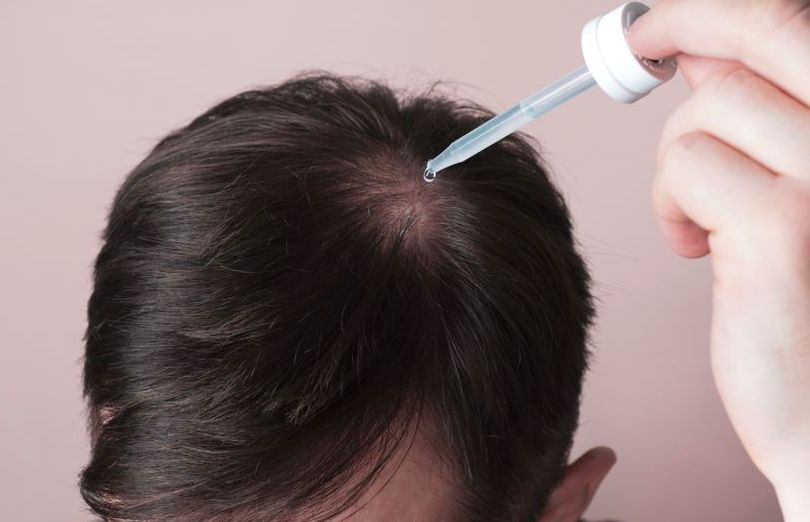
Applying a topical minoxidil and finasteride solution to the scalp with a dropper
Strong evidence · First-line

Topical combo: minoxidil + finasteride

Applied to the scalp — often one daily solution
Combo-level regrowth · lower systemic side effects

Why it works: Topical minoxidil widens blood vessels and extends the hair's growth phase (regrows & thickens), while topical finasteride blocks DHT — the hormone that shrinks follicles — right at the scalp. Combined in a single compounded solution or spray, they hit hair loss two ways while keeping blood-DHT, and often side effects, lower than pills. The go-to starting stack for most people.
Two oral hair-loss pills — a capsule and a tablet
Strong evidence · Most-studied

Oral combo: minoxidil + finasteride

Two daily pills — the best-documented regimen
~94.1% improved at 1 year (vs 80.5% / 59% alone)

Why it works: Low-dose oral minoxidil grows and thickens hair body-wide, while oral finasteride lowers DHT to protect the follicles you still have. In a 450-patient, 1-year study, 94.1% improved on the combo versus 80.5% (finasteride) and 59% (minoxidil) alone. Prescription only — discuss side effects with a doctor.
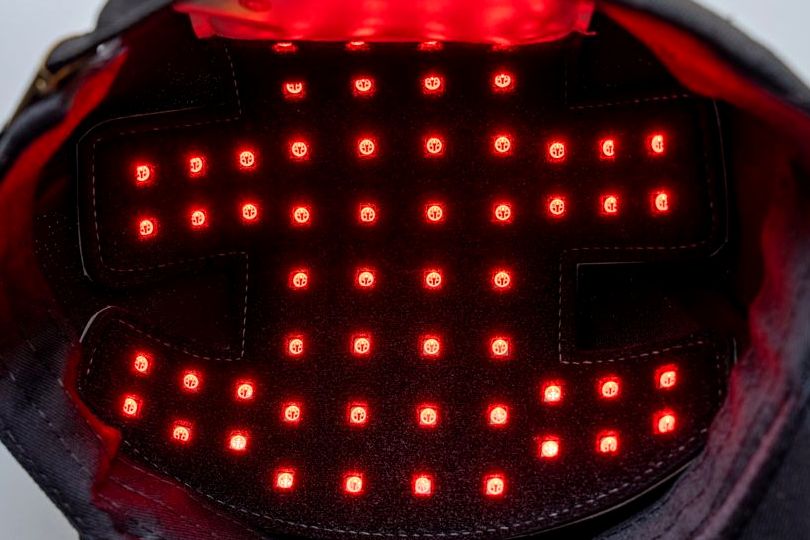
Interior of a red light therapy laser cap with LEDs illuminated
Moderate–strong evidence

Red light therapy (LLLT)

Laser caps, helmets & combs
Significant density gains in trials; FDA-cleared devices

Why it works: Low-level laser (red light) is thought to boost cellular energy in follicles and shift them into the growth phase. Clinical trials show meaningful increases in hair count and thickness. Painless, at-home, no drugs — but you must use it consistently.
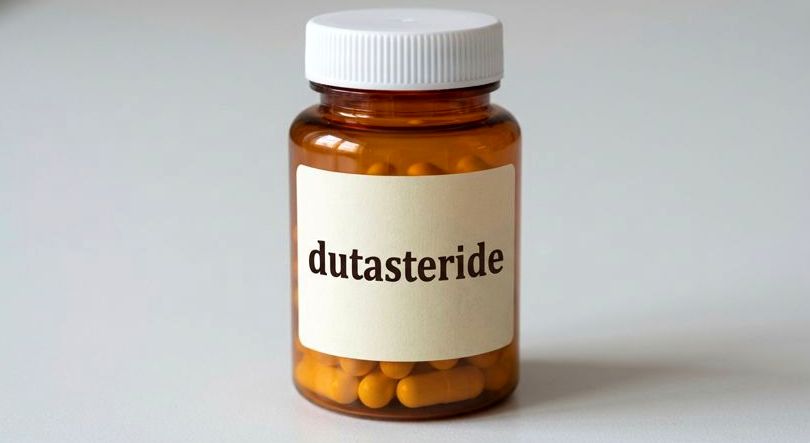
An amber pill bottle of dutasteride capsules
Strong evidence

Dutasteride

A stronger DHT blocker than finasteride
Lowers DHT ~98% (vs ~71% finasteride) · top single agent in a meta-analysis

Why it works: Dutasteride blocks both type 1 and type 2 5-alpha-reductase, so it suppresses DHT more completely than finasteride — and in a recent network meta-analysis it was the single most effective drug for male-pattern loss. Prescription; used off-label for hair loss in the US (approved for it in some countries). Stronger suppression can mean more side-effect risk, so discuss it with a doctor.
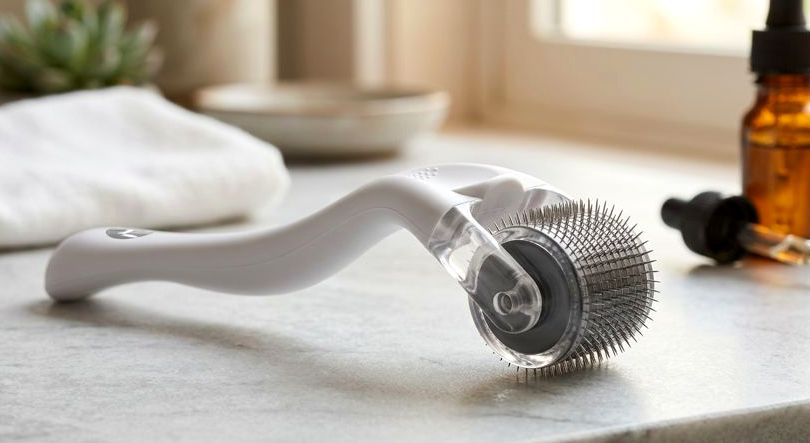
A dermaroller microneedling device beside a dropper serum bottle
Moderate evidence

Dermaroller (microneedling)

Boosts your other treatments
Microneedling + minoxidil clearly beats minoxidil alone

Why it works: Rolling fine needles over the scalp creates tiny, controlled micro-injuries that trigger wound-healing growth factors and help topical minoxidil or dutasteride absorb far better. Studies consistently show microneedling combined with minoxidil outperforms minoxidil on its own. Done at home with a roller or in-clinic — keep everything clean to avoid infection.
Botanical hair-growth supplement capsules on a nightstand with water
Moderate evidence

Nutrafol

Botanical hair-growth supplement
83% reported satisfaction; ~19–37% faster growth (women's study)

Why it works: A daily supplement with saw palmetto, ashwagandha, marine collagen and other botanicals aimed at DHT, stress and inflammation. Placebo-controlled studies show benefits, though effect sizes are modest and some data is company-funded. Best as a complement, not a replacement, for proven treatments.
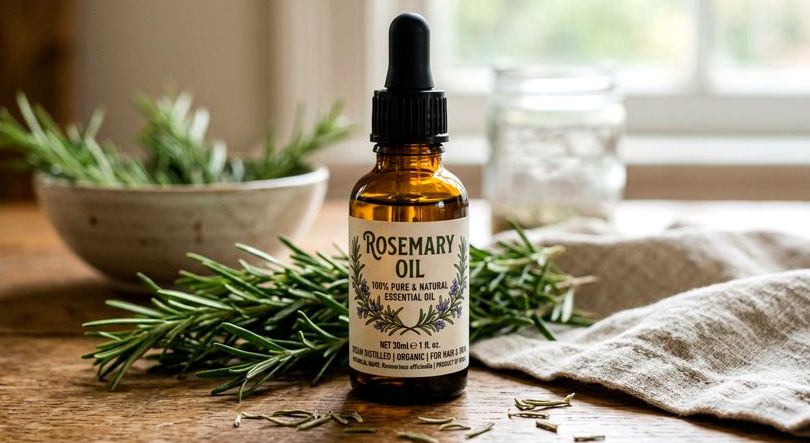
A dropper bottle of rosemary oil beside fresh rosemary sprigs
Emerging evidence

Rosemary oil

Natural, low-side-effect option
Matched 2% minoxidil in one 6-month trial

Why it works: Rosemary oil may improve scalp circulation and has mild anti-DHT and anti-inflammatory effects. In a 2015 trial it performed on par with 2% minoxidil at 6 months, with less scalp itching — though 2% is weaker than the standard 5%. A gentle option for mild thinning.
An amber dropper bottle of copper peptide serum
Early evidence

Copper peptides (GHK-Cu)

Follicle-stimulating serums
Preliminary; limited human data

Why it works: Copper peptides may support follicle health, blood-vessel growth and the hair-growth phase. Early lab and small studies are promising, but robust human evidence is still limited. Often used as an add-on serum alongside minoxidil.
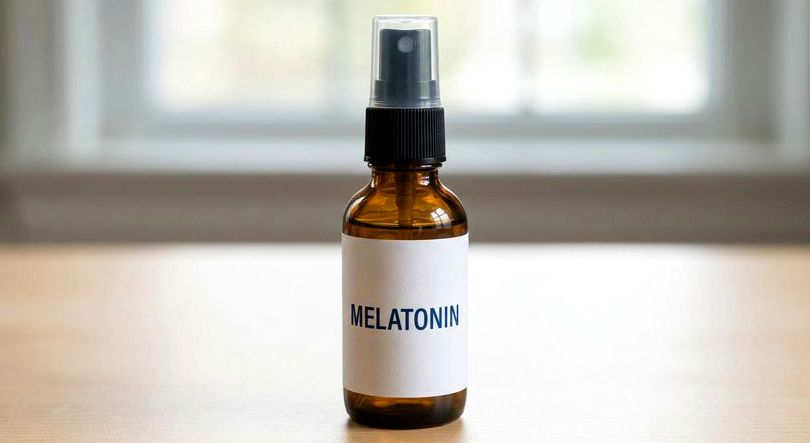
An amber spray bottle of topical melatonin
Early evidence

Topical melatonin

Antioxidant scalp treatment
Small studies show reduced shedding

Why it works: Applied to the scalp, melatonin acts as an antioxidant and may influence the hair-growth cycle. Small studies report less shedding and modest density improvement. Evidence is limited, so treat it as a supportive add-on.
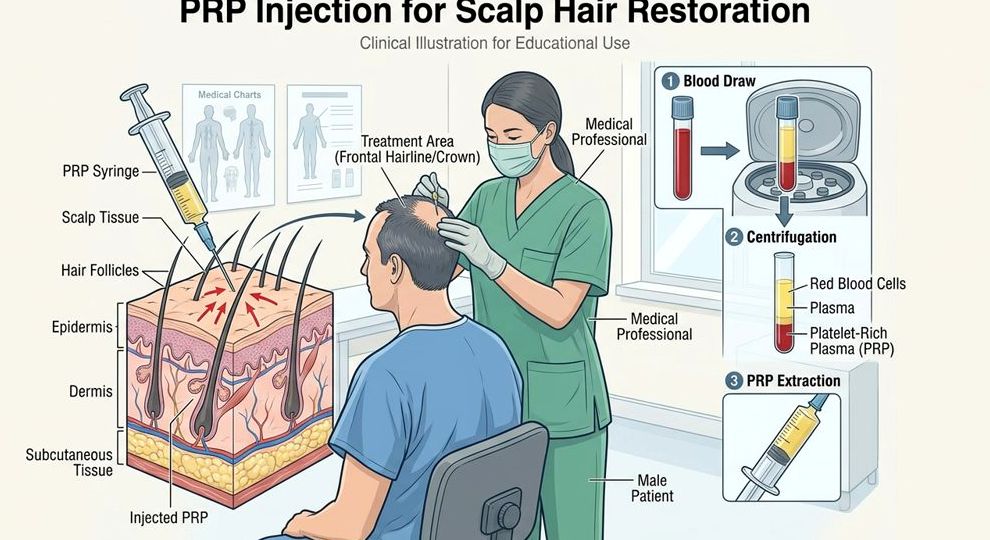
Illustration of a PRP injection for scalp hair restoration — blood draw, centrifugation, and injection into follicles
Early · experimental

Stem cell & exosome therapy

In-clinic regenerative injections
Early trials show denser, thicker hair · not FDA-approved

Why it works: Concentrated growth factors and stem-cell signals — from your own cells, PRP (platelet-rich plasma), or exosomes — are injected into the scalp to "wake up" dormant follicles. 2024 trials reported more terminal hairs and thicker shafts. Important: the FDA warns that marketed stem-cell and exosome hair treatments are still unapproved, investigational — discuss carefully with a physician.

Treatment comparison at a glance

Success rates are drawn from published studies; individual results vary. Percentages describe study populations, not a guarantee.

TreatmentHow it worksReported successEvidence
MinoxidilExtends growth phase, boosts blood flow~84% some response; ~60% meaningful regrowthStrong
Finasteride (oral)Blocks DHTStops loss ~80–90%; regrowth ~65%Strong
Topical finasterideScalp-applied DHT blockerComparable to oral, fewer systemic effectsGrowing
Minoxidil + finasterideGrows + protects~94% improved at 1 yearStrong
Red light (LLLT)Stimulates follicles with lightSignificant density gains; FDA-clearedModerate–strong
NutrafolBotanical supplement (DHT/stress)83% satisfied; ~19–37% faster growth (women)Moderate
Rosemary oilCirculation, mild anti-DHTMatched 2% minoxidil in one trialEmerging
Copper peptidesFollicle & vessel supportPreliminaryEarly
Topical melatoninAntioxidant, hair-cycle supportReduced shedding in small studiesEarly
Hair transplantMoves permanent follicles90–95% graft survivalStrong (surgical)

Frequently asked questions

How much does a hair transplant cost in Tulsa?

Tulsa transplants typically run $6,500–$13,000, based on how many grafts you need. Only a consult gives you a precise graft count and a firm price, so treat these as budgeting numbers and confirm with the clinic.

Should I try medication before surgery?

Usually — particularly in the early stages. Minoxidil and finasteride can slow or reverse thinning, and surgeons generally keep patients on them even after a transplant to guard the hair that wasn't moved. Your doctor can help you decide.

Do these success rates guarantee results?

No. The percentages come from studies of groups of people and describe averages — your results depend on your type of hair loss, how early you start, consistency, and individual biology. This page is educational, not a promise of results.

Which treatment is best?

For typical male-pattern loss, finasteride and minoxidil together carry the strongest evidence (often with red light therapy). Supplements and oils — Nutrafol, rosemary, copper peptides, melatonin — can support but not replace them, and only a transplant is permanent. Ask a professional what's right for you.

Is this medical advice?

No. This site is for general information only and is not a substitute for professional medical advice. Always consult a licensed physician or dermatologist before starting or stopping any treatment.

Medical disclaimer: This website provides general educational information about hair loss and hair restoration and does not provide medical advice, diagnosis, or treatment. Success rates cited are from published studies and reflect study populations, not individual guarantees; results vary. Medications such as finasteride and prescription minoxidil carry potential side effects. Always consult a licensed physician or dermatologist before beginning any treatment. Cost figures are estimates only.

Selected sources: ISHRS — 5% minoxidil effectiveness · Rosemary oil vs 2% minoxidil (PubMed) · Bayesian network meta-analysis of AGA treatments · Nutraceutical (Nutrafol) RCT — JDD · ISHRS — Dutasteride for hair loss · Network meta-analysis (dutasteride ranked top agent; microneedling combos) · Hair-follicle stem cell trial for AGA — Plast Reconstr Surg (2024) · Combination therapy figures from a 450-patient 1-year study. Stem-cell & exosome hair treatments are investigational and not FDA-approved.